Essays
Trapped in the Suburbs: Geography, Place, and Authenticity in Idris Goodwin’s How We Got On
The Goal of Sampling is Not Sampling: Dissecting Hip'-Hop’s Most Important Tool in How We Got On
How We ALL Got On: Themes of Community and Connection in Idris Goodwin’s How We Got On.
All essays were written by Bethany Dickens Assaf between November and December, 2021 and may not be used or distributed without permission.
Trapped in the Suburbs: Geography, Place, and Authenticity in Idris Goodwin’s How We Got On
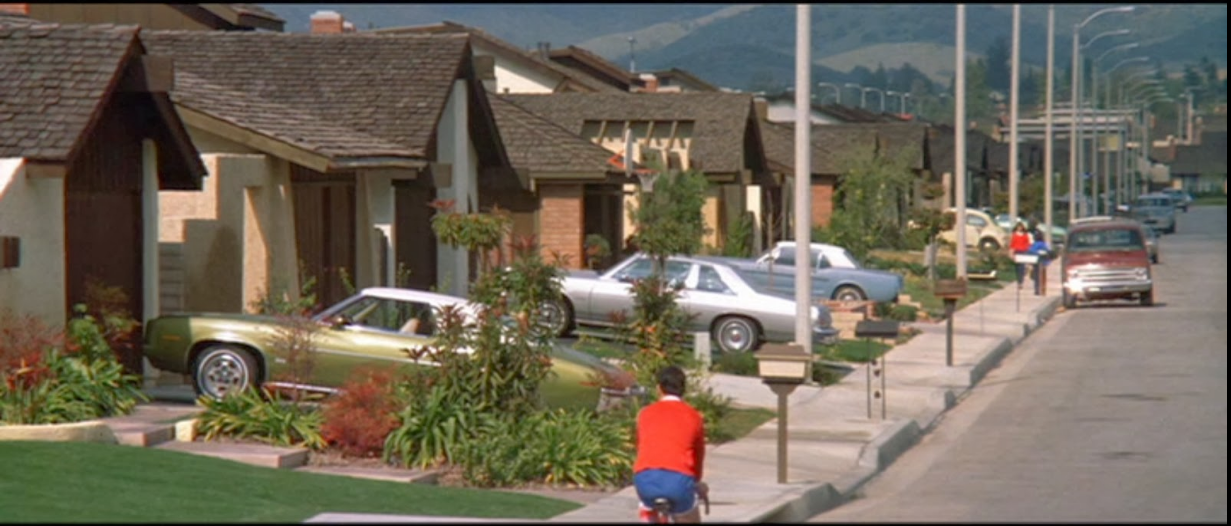
Like most ‘coming of age’ stories, How We Got On’s characters look at the world and ask a lot of questions. The seminal, angst-ridden inquiries of the world would be: ‘Who am I?’ ‘Where do I fit in?’. Idris Goodwin uses this framework to posit something more specific, more personal, and more rooted in the history and culture of the 1980s:
‘Can someone from the suburbs really contribute anything of value to the world of hip-hop?’
One could also add an addendum to this question: “...hip-hop, which, for its entire history has been steeped in the mythologies and cultures of specific regions, communities, and neighborhoods?”
The importance of this question to Hank and Julian (and to a lesser extent, Luann) cannot be overstated. In our introduction to his character - in his first LINE - Hank can’t help but situate himself in comparison to more well-established epicenters of hip-hop culture:
“I know you usually got rappers from New York and Compton, but I do my own thing too...Where I come from doesn’t matter! It’s all about how I get busy on the mic. That’s all that matter, right?”
The repetition of his question signals a bit of defensiveness. And he has a right to be defensive, as the Selector indicates in her response: “Yes and No. No but yes.” She then calls their suburban enclave: “...the land in between. In the middle. Nowhere.”
The tension between Hank’s desperate question and the Selector’s realities of geography and credibility is embedded into most of the play’s tensions. Hank is unable to properly see his surroundings until he removes himself from their contexts and constraints, getting a bird’s eye view from the water tower. Both he and Luann spend the play trying to convince their Reganite-era parents that hip-hop is a valid art form and not “ghetto” or “excuse music,” a la the hardcore gangster rap of Los Angeles (which did not define that or any hip-hop scene, but certainly defined it for anxious parents).
The play is actually quite prescient in its anticipation of Straight Outta Compton’s obsession with what hip-hop journalist Jeff Chang calls: “The Real.” He elaborates that after the release of that album, “...rappers had to represent - to scream for the unheard and otherwise speak the unspeakable. Life on the hair-trigger margin...needed to be described.” While Hank might have sensed that hip-hop was always broader than any locality, he is faced in the play both with counter-arguments of both his father and the loudest voices in hip-hop at that time (referenced somewhat in the play by “the guys” in Julian’s old neighborhood).
For Julian, the tensions of his group’s lack of credibility and authenticity eventually leads him to his climactic decision to leave the group. For him, this question is rooted not only in their location (Hank’s point that: “man, you’re not LL Cool J from Queens” is applicable here), but in his own insecurities as an MC, his father’s incessant mocking, and his perception that having a girl in the group will render them silly (a la the fictitious play on Will Smith and DJ Jazzy Jeff: “Jazzy Joyce and the fresh princess”). Though he questions the seriousness of Hank’s vision throughout the piece, it’s when Luann calls him a “poser” that these issues converge and rap really loses its shine and the inauthentic pastiche of 1980s hip-hop begins to bother him. He stops watching Yo! MTV Raps because: “There is a director. Probably some white guy from someplace like The Hill...it’s a lie. I know it is. How can anybody be that...sure?”
Julian here is representing, “the tension between culture and commerce would become one of the main storylines of the hip-hop generation” - and nothing says ‘commerce’ like the Ronald Reagan signs in lawns throughout The Hill. If by the late 1980s, hip-hop was meant to be raw and authentic - with one’s geographic location as central to credibility - ‘suburban rap’ was never going to feel right, especially for someone as image-conscious as Julian.
But for Hank and Julian, authenticity isn’t a stumbling block - it ends up being the answer. Thanks in part to “the gospel according to [the more self-realized] Luanne,” the insecurities eventually fall away and the question is simplified from: ‘Do the suburbs have anything to say?’ to … ‘Do I have anything to say?’
And the answer? Simply: speak.
And when Julian finally does, it’s not like anyone else (page 59).
Video:
Rappers from the suburbs: https://www.youtube.com/watch?v=YUA2xYOakGg
(While this video highlights rappers from the suburbs from recent times, how does it also undercut that experience?)
Questions for Further discussion
‘Can someone from the suburbs really contribute anything of value to the world of hip-hop?’ - do you think this question gets answered? (The answer might be in my third essay!)
Can you think of other skills, occupations, or careers that may or may not be possible depend on where you live or other factors beyond your control? What are those? What about that is fair or unfair?
Luann doesn’t seem as concerned as the boys regarding her location. Why do you think that is? What does that say about her approach?
What are your thoughts on the song “The Hill?” What are the references to hip-hop? Where are the specific contrasts between most rappers and Hank and Julian’s lives that you can identify?
The Goal of Sampling is Not Sampling: Dissecting Hip'-Hop’s Most Important Tool in How We Got On
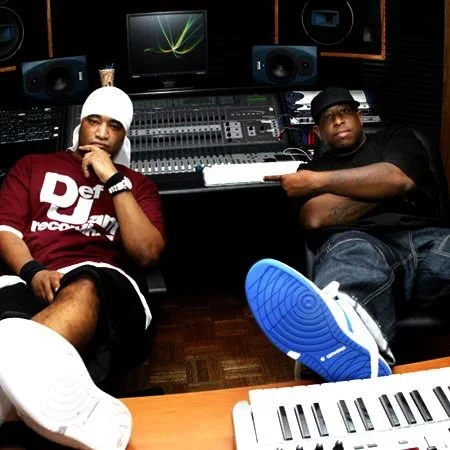
The title of this essay, which points to the sampler as hip-hop’s most important tool, is almost certainly not hyperbolic. The release of the E-Mu Systems SP1200 (the ‘SP’) in 1987 - not the first sampler (they’ve been around since the 60s), but certainly the cheapest - democratized, energized, and ushered in hip-hop’s Golden Age.
In fact, the vast majority of the most recognizable soundscapes in hip-hop music are sampling something: from the layered drums of Marley Marl’s and M.C. Shan’s “The Bridge” (built on the foundation of “Impeach the President”) to the high-pitched, shrieking sax that Public Enemy sampled from the JB’s on “Rebel Without a Pause”; from the nearly-300 songs that sample Grandmaster Flash’s “The Message” to the ump-hundredth use of James Brown for “Eric B. is President.”
When discussing the powerhouse sampling of AC/DC’s “Back in Black” on the song “Dope Beat,” KRS-One admitted: “To this day I don’t know why AC/DC didn’t sue us for that song.”
He was right to be concerned because, despite the (probably apocryphal) quote from Picasso that “all art is theft,” and recording artist Moby’s insistence that “the goal of sampling is not sampling,” but rather, creating something new, paying to ‘clear’ samples - or getting sued after the release of an album - was also part of the landscape of 80s and 90s hip-hop.
The Turtles and Steely Dan’s suits against De La Soul over the samples used in 3 Feet High and Rising cost the Tommy Boy recording company, “a hundred thousand dollars total, and De La had to bear about fifty thousand…That was a bad situation, and demoralizing,” according to the band’s record producer Tom Silverman.
Still, the art of sampling continued to push hip-hop in unprecedented directions, so it feels only right that so much of How We Got On is driven by Julian and Henry’s desire to win a workstation (yes, Akai MPC is a real piece of equipment for sampling, not something invented for the play) and culminates in the Selector’s ‘sampling’ of the entire play to create something bold and new in the final moments of the play. In doing this, Goodwin is rewriting the ending of his play much as a record producer or DJ would use a sample to create new music.
Putting it simply: the arc of How We Got On should conclude with Julian returning to the city and dropping music entirely and Henry never making it as an artist due to his location and life circumstances. Instead, we are presented with a reimagined version of the story - one that ends with them together, playing a role in the larger narrative of hip-hop music. Like the record producers of the 1980s, mixing small sections of songs together to create something authentic to them, Goodwin is creating something new and opening up the potential of the world we’ve inhabited for the past 90 minutes.
Questions for Further discussion
What other hip-hop terms and technologies are metaphors to you in this play? (Might be dub side, the breakdown, biter, hook, etc.)
Find a song other than what I’ve mentioned in the essay that uses a sample. Compare it to the original. How does the newer song use the sample? How does it change it? What does the sample contribute? (If you need help thinking of something, check out: https://www.whosampled.com/)
Take a look at the end of How We Got On and identify where from the play each of these references comes from. Has the Selector changed the meaning from how the line or moment was originally used? If so, how? If not, what’s the thread that’s carrying through?
How We ALL Got On: Themes of Community and Connection in Idris Goodwin’s How We Got On
On page 58 of How We Got On, Hank is trying to convince Julian to stay with the group. It speaks volumes that his closing argument is not one of defensiveness or grandiose claims of what the future might hold but simply: “It’d be great…it’d be dope if you were on it.” This theme - of community, of hip hop’s ability to express ourselves as a means of connection - is present from the beginning of How We Got On, not only in the plot but also the staging: no-one is ever onstage alone. The Selector, manifesting from the beginning of the piece, reminds us that, in this play, the characters are not only connected to each other - they are connected to the wider arc of hip hop’s grand story.
The idea of hip hop culture and music as a connecting force is not a universally-accepted lens; this is an argument that Goodwin is consciously making against a counter-narrative: that hip hop promotes vision, violence, destruction. Even the Selector notes, after watching Julian and Hank tussle, that there is “violence in the rap game” (even though, as they so rightfully note, there’s violence and unfairness and abuse in every style of music).
In the late 80s, reactionary groups such as the Parents Music Resource Center extended their censorship power from rock to ‘gansta rap,’ and 2 Live Crew’s As Nasty As They Wanna Be was officially declared ‘obscene’ by a U.S. District Court, leading to arrests of some of the crew’s members when they tried to perform live. Discussing N.W.A.’s Straight Outta Compton, FBI Assistant Director Milt Ahlerich wrote that the band was encouraging, “violence against and disrespect for the law enforcement officer.” Disruptions during N.W.A. concerts were frequent - though it was usually due to sudden appearances of police officers, under orders to shut things down.
It’s worth noting that gangsta rap was itself multifaceted - to say nothing of the myriad forms hip hop collectively was taking at the time, from Digital Underground’s humorous party beats to De La Soul’s jazzy pastiche - but to concerned parents, the concept was distilled into something nerve-wracking.
Even the parents - and some unseen students - in How We Got On are skeptical that hip hop and rap are a positive influence. On page 16, Hank states that some of his black peers “think rap is ghetto,” and Luanne’s father refers to rap as, “excuse music.” Even Hank’s father initially doubts that value of hip hop.
As the story progresses, however, the characters grow and become stronger as they engage honestly with one another. In Julian’s case in particular, the only way he is finally able to “breathe in joy” is by blowing “out everything that’s not joy,” in one of the play’s most brutally honest rapping sequences. Goodwin has excellent reason for trusting this perspective of hip hop as a force for joy and togetherness: in a recent interview, legendary b-boy PopMaster Fabel said:
"The true essence of hip hop is interactive, where you can go and find a protege, find a kid that you can teach. Or a kid will come to you and look for a mentor...this is where the real deal happens and it's an actual, communal gathering...where people are exchanging their styles in friendly competitions. That's what hip hop truly is."
This spirit of community also has implications beyond in-person mentorship. In the book Can’t Stop Won’t Stop, Public Enemy group member and rap legend Chuck D. is quoted as saying: “So these kids are being raised by LL Cool J because LL Cool J is talking to the kids more directly than their parents ever did.”
Studies have proven this out in more quantifiable terms: in a 2017 article for the academic-driven digital journal, The Conversation, social work and therapy researchers concluded that research shows rap might be “the perfect form of music therapy” due to its focus on accessibility, inclusivity, and social consciousness.
Even though Goodwin does not provide us with an epilogue to Hank, Luanne, and Julian’s stories, there is no doubt that the characters in How We Got On benefit from their experiences with hip hop and, in this way, are engaging with a grander narrative of hip hop participation that continues to this day.
Discussion Questions
One of the many reasons Luanne’s dad is against rapping is because he believes it doesn’t take “training.” How does Luanne respond? What is positive and/or negative about the fact that hip hop doesn’t require years of training to engage with it?
Think about your character in terms of authenticity and self-expression. Where during the play are they ‘hiding?’ Where are they being their true selves? How is hip-hop music reflected in and engaged with at that moment?
In the play, Luanne and Julian are faced with stereotypes that some hip hop music might be seen as reinforcing. What is your reaction to these? Are there times when not everyone might feel welcome in hip hop? What would change look like in those areas? Have we made any progress since the 1980s?
More resources:
https://theconversation.com/the-healing-power-of-hip-hop-81556
https://medium.com/cuepoint/the-great-rap-censorship-scare-of-1990-115edc69a62f
https://www.youtube.com/watch?v=p_G14Y_4A68
https://peoplesworld.org/article/hip-hop-is-how-you-live-it-s-a-way-of-life/